Author Archives: Webmin
Rumours, Rumblings & Rock Hard Resistance
 CARIBOO NORTH MLA BOB SIMPSON SPEAKING TO CMA MEETING
Rumours, Rumblings & Rock Hard Resistance
CMA Monthly Meeting with Cariboo North MLA Bob Simpson
By Arthur Topham
CMA Webmin
March 13, 2011
The regular monthly meeting of the Cariboo Mining Association, held at the Quesnel Senior’s Center on Sunday, March 13th, featured Cariboo North MLA Bob Simpson, former representative of the NDP party and now sitting as an Independent in the B.C. legislature.
Bob was attending the meeting at the request of the CMA membership who are striving to find ways to deal with upcoming bureaucratic changes within the provincial government ministries affecting placer mining in the Cariboo region.
Attendance was good and interest high as CMA President Chris Winther introduced Simpson to an audience of placer miners eager to hear further news on some of the upcoming proposals and changes to ministries directly responsible for mining and exploration in the province.
Topping the list of concerns were questions regarding the new Ministry of Natural Resource Operations and how the proposed power structure will take shape and deal with issues of leases, cells, tenure management, First Nations, and, foremost for many of the placer miners in attendance, fee increases of such proportions that they threaten the very survival of the small operators.
Government de jure
Simpson prefaced his comments on all of these issues by doing his best to enlighten the audience about the present political situation in Victoria following the change of guard within the Liberal government’s leadership and pointing out that until noon on Monday, March 14th (which would be the day after the meeting) when Premier-elect Christie Clark was to announce to the province her government’s upcoming agenda, it was virtually impossible to know who and how the relevant ministries would be dealing with placer miners and their concerns.
What was clear, according to Simpson, was the reality that government at this stage was in a state of complete flux and disarray and any and all of the backlog of proposals, permits and possibly impending legislation formerly being discussed were all subject to this confusing scenario now unfolding in the political arena of the province. If Clark announces to the house this coming Monday that an election is not happening until 2013 then that will affect the mining industry in one fashion but if an election is going to pre-empt the reorganization of the ministries involved then that will essentially block any possible progress over the coming months ahead in terms of resolving the issues that placer miners are struggling to get answers to now.
Images
The present negative image of placer mining in the province was voiced again by those present and the argument put forth that due to a number of misconceptions on the part of the news media, who inevitably are unduly influenced by some of the more strident environmental groups in the province and coupled with First Nations concerns, the general public perceives placer mining as an environmental threat and associates the behaviour and actions of small, independent miners with that of the big hard rock mining consortiums who tend to always capture the media’s attention with their giant projects that inevitably raise public concerns about environmental damage.
Simpson was quick to agree that this image problem was definitely a clear and present danger to the small operators who are and have been working for years now under very strict guidelines and regulations that ensure a minimal amount of environmental disturbance relative to the major corporations who tend to dismantle mountains rather than move mere cubic meters of pay dirt and overburden. And in this sense, Simpson stated, the ecological footprint left by the small placer miner and their operations is barely noticeable relative to larger mining companies yet the image of possible impending environmental damage of vast proportions tends to stick in the public’s mind and override the facts surrounding the actions and effects of the smaller operators.
Examples of this, according to Simpson, are two major gold mining operations located in the Cariboo at Mount Polley and Gibraltar.
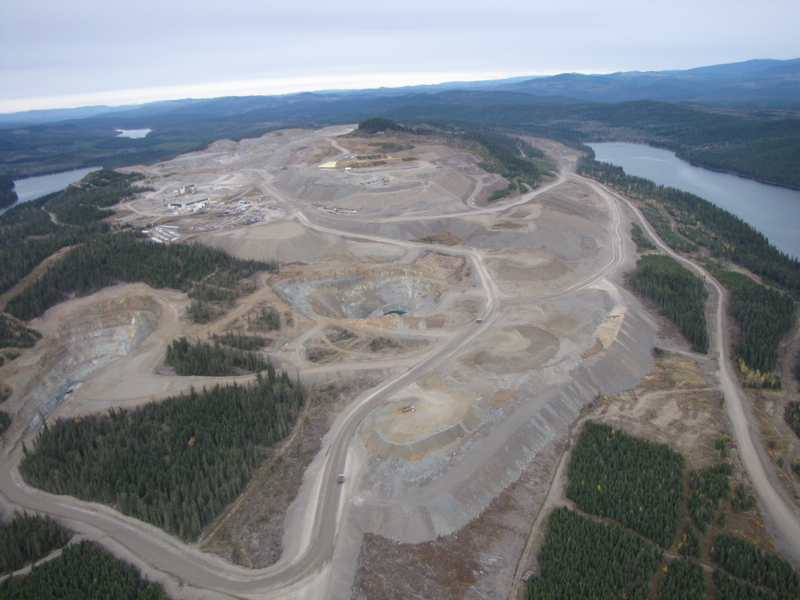 PHOTO: JOHN BOT MOUNT POLLEY MINE NEAR LIKELY, B.C. (QUESNEL RIVER WATERSHED)
 PHOTO: JOHN BOT GIBRALTAR OPEN PIT MINE (FRASER RIVER WATERSHED)
Initially these mines were legislated to operate in a manner that precluded the discharging of any effluent that might negatively effect either the Fraser River or Quesnel River watersheds where these operations are now in place. Recent changes and updates plus added investment dollars have increased former levels of production resulting in the companies’ recent applications for permits that would allow additional discharge of material outside the former containment areas. Whether these permits will meet the approval of both the provincial and federal governments waits to be seen. Should they go ahead the footprint left will again be of a much larger scale than anything the small placer miner will be leaving behind. If the changes prove to be environmentally sound all will be okay but should problems arise the placer miner will most likely also bear the burden of any negative publicity.
How to counter such problems should they arise becomes an added burden for the placer miner on top of dealing with all the other legislation and ministerial changes in government.
The feds
The issue of federal fisheries and their impact on placer mining operations in the Cariboo was also raised, with Simpson wholeheartedly agreeing that the fed factor is clearly problematic when it comes to placer mining. Specific to this discussion were concerns about specific areas in and around Likely/Keithley Creek where CMA members are dealing with land use issues surrounding the opening up of ground that currently restricts placer miners from operating yet allows major forestry companies to log and also gives the hard rock mining industry access to do drilling and exploration work.
Part of this discussion included Simpson remarking on the 2003 Task Force document that was produced by the provincial Liberal government which apparently covers issues like what is occurring in the Likely region. Chris Winther, CMA President, pointed out that he was unable to access the information contained in the document and Simpson added that it was deemed a “Cabinet Report” and therefore, by definition, inaccessible to the public and beyond the scope of even the Freedom of Information (FOI) act. Obviously the audience was not impressed by this refusal to withhold information affecting their ability to mine in areas where the big boys are given free rein in the sandbox yet they were being told they couldn’t explore or mine.
First Nations
A further conundrum voiced during the meeting, for placer miners who, for the most part, are small operators working within already strict government guidelines and under continual financial pressure, was the question of First Nations and how the small placer miner is to deal with the bureaucratic nightmare that has resulted from the province’s and the fed’s apparent inability to deal with one of the most fundamental and basic land use problems – the resolution and final settlement of the Treaty issue with the former owners of the province’s land and natural resources. As Simpson went on to explain it’s an issue of primary concern to all the players involved and due to the fact that the provincial and federal governments have not addressed and settled it the haunting effect tends to override every decision on land use management and play a major role in how the placer miner is caught up in the problems and unduly affected by them.
As a number of members pointed out to Simpson respecting this spectre of added red tape, they don’t see it as being their personal responsibility to deal directly with yet another level of government in the form of further First Nations bureaucracies. They felt that the regulations put in place should be such that when they apply for licenses or permits or mineable ground that they deal with the appropriate provincial mining ministry rather than having to also represent themselves individually to each and every First Nations group that wishes to have a say in their placer operations.
Simpson did his best to explain how and why the problems arose and at the same time tried to explain to the obviously disgruntled audience that it wasn’t necessarily all a negative thing that First Nations were demanding a voice in the management of lands which they had, in actuality, never ceded to the provincial or federal governments. He went on to explain how he had visited a number of different areas of the province where the native bands were working in partnership with different mining interests and cutting deals that turned potential conflicts into win-win situations for all parties concerned. Whether or not these agreements were comparable with those of smaller, individual placer miners wasn’t clarified but the point that Simpson appeared to be making was that there was a certain degree of responsibility that the placer miner had to recognize as being his or hers and ultimately it might prove profitable in the long run for placer operators to take on this aspect of negotiating on their own behalf.
Rumours of fees
The ongoing discussion regarding fee increases for placer miners was also brought up for Simpson’s consideration and comment. Again he cautioned the audience that due to the turmoil and confusion at the present time and also due to the rather nebulous and shady manner in which the former Campbell government arranged the province’s financial books, fighting against and justifying the increases won’t be a simple task. Revenues generated by the placer mining industry have been funneled off like larger aggregate in a screened shaker plant and deposited surreptitiously in other budgetary bins that tend to disguise their whereabouts and origins and make them susceptible to manipulation for political purposes, thus posing difficult problems for the small operator who expects transparency when it comes to government demands for more and more fee increases. Simpson’s basic message was that until we know the direction and the schedule of the present government and are able to identify all the new players within the various ministries responsible it will be virtually impossible to get answers to these questions but once things have settled down and the high water run-off from this latest political storm in the province subsides, we can then proceed upon the only reasonable course left, that of lobbying directly for changes that the placer miners of the province can live and work with.
Ministries of DoubleSpeak?
A final topic of discussion brought to Simpson’s attention by CMA President Chris Winther was that of the closing of the province’s mining offices. Given the fact that the Cariboo Mining District is the largest and richest gold producing area of the province Winther felt that shutting down the government’s mining office in Quesnel was counter-productive and placed a number of additional burdens on the placer mining industry that once functioned quite well under the old system. Simpson responded by saying that under the new proposals being implemented by the Liberal government it was virtually a dead issue that ANY mining offices anywhere in the province would be left in existence. The closest placer miners could expect to such a government office would be the new venues known as “Front Counters.” Like the government’s “Service, B.C.” outlets now found in every provincial building the names change and any direct encounter with government agents who can address local, immediate problems, becomes more and more impossible to achieve. It appears to be all part of the new DoubleSpeak that affects government bureaucracies at all levels these days.
The best that we can hope for is a “Front Counter” in Quesnel Simpson stated and from what he had heard this latest bureaucratic shuffle may place the dance floor in the former Forestry Offices building in another part of town where they too are experiencing the bungling effects of impending bureaucratic changes.
The meeting culminated in a discussion about ways and means of lobbying the various levels of government in order to gain answers to all the unresolved questions that originally prompted asking Bob Simpson to attend the CMA meeting in the first place. Once again Simpson advised the audience that until the political upheavals of the day settle down and heads of ministries were in place it would be fruitless to expect any changes. Afterwards though will be the time to begin educating the bureaucrats about the concerns expressed at the meeting. Mention was also made that the CMA’s new website was a valuable tool in helping to communicate the concerns of the placer miners in the Cariboo and would undoubtedly prove useful in the long and lonely lobbying process ahead. Ultimately, it appeared, the CMA is being forced by factors beyond its immediate control into playing the waiting game along with the rest of province.
Time, we hope, will resolve these issues. A hearty and encouraging show of appreciation for Bob Simpson’s advice and comments was given at the end of the meeting and the CMA looks forward to more positive dealings with the MLA in the days and months ahead.
————————
Polarities by Celine Duhamel, Director C.M.A.

Polarities
By Celine Duhamel
Director, C.M.A.
On our last holiday away from the snow I found myself at a birthday party being introduced as a prospector.
Right away a fellow next to me admitted to having a claim and with a smile said he was protecting it from being mined. He also continued on about how great it was for camping.
I thought to myself here we go again. He’s obviously putting me on the wrong end of the debate over the environment vs mining issue and trying to portray himself as its savior.
So I replied that yes in the past there have been miners that left messes but that now we are held accountable for what we do by a lot of government regulations which require reclamation of disturbed ground and that things have changed from what they used to be in the “old days.”
He then proceeded to tell me about someone he knew who dredged. I replied that I knew of only a couple of places in B.C. where it was still allowed and they were not where he mentioned. I asked if this fellow had a free miner’s license. He said yes but later remarked that he doubted it.
He was still interested in dredging so I told him that for us we could not mine within 10 metres of the flood plain of a creek and that in any case there should not be any visible sediment entering the stream. He was surprised by this information.
So here you have it folks right from the trenches. A person with a free miner’s license and a claim but still ignorant of mining regulations and on his high horse spouting off negative misinformation on mining for all who’ll listen. I would bet money that he wears precious metal jewelry, owns a cell phone, a computer (with gold components) and perhaps even some gold crowns.
Like most placer miners, I realize that the environment is in distress and I like to think that I’m doing my part for the betterment of the ecology. Similarly we share the enjoyment of nature; but what I am concerned with is how miners are perceived by the general public. It is not the first time I have come across “nuisance stakers”, and there is no sense ranting and raving to them. I am hoping that in the future we can inspire trust by the way we do our mining.
Join the C.M.A. if you find that these principles fit your own. The advancement of our association does not rely on any one person but on all of its members. There is a need for a place where we can voice our opinions and perceptions to become a unified force in today’s society.
Thanks for listening.
Celine Duhamel, Director C.M.A.
CLAIMS, GOLD & EQUIPMENT: FOR SALE, TRADE, RENT OR OPTION
 The CMA website is now opening shop for miners wishing to advertise their claims or equipment or gold for sale or trade. Please look at the top of the Home Page on the black menu and click on the “Claims & Equipment For Sale” to find what you might be looking for.
PLEASE NOTE: If you want to post your information on the site just send an email to the Webmin at: radical@radicalpress.com Include any photos that you wish to place in your advertisement. Please make sure you include any contact information and other relevant data.
Use jpgs or tiff files if you can for photos and better to send a larger file than a tiny one.
Taseko’s Prosperity mine “dead issue,” say Indians

Taseko’s Prosperity mine “dead issue,” say Indians
Taseko Mines Ltd (C:TKO)
Shares Issued 187,745,853
Last Close 2/23/2011 $6.16
Thursday February 24 2011 – News Release
(Article submitted by John Bot)
Chief Joe Alphonse of TNG reports
TASEKO MINES LTD PROVES IT ONLY CARES ABOUT MONEY – NOT THE ENVIRONMENT OR RIGHTS
Taseko Mine’s Ltd. is playing costly and dangerous games with first nations and all British Columbians in its cynical attempt to revive its so-called Prosperity mine, the Tsilhqot’in National Government said today.
“This latest move would be laughable, were the issue not so serious,” said TNG Tribal Chair Chief Joe Alphonse. “Enough is enough. It is time to put an end to this company wasting everybody’s time and resources on a project that most now realize is a dead issue.
“This latest move by the company leaves little doubt now that its plan all along was to get the cheapest project it could. Now it is desperately trying to find any way it can to revive this project regardless of its impact on the environment and our First Nations rights,” Chief Alphonse said.
“We commend the federal government for seeing through the company’s claim and rejecting its first plan – which the company was told for 17 years was not acceptable – and we also commend Prime Minister Stephen Harper for standing firm on that decision this week,” said TNG Xeni Gwet’in First Nation Chief Marilyn Baptiste.
“Hopefully the federal government, the soon-to-be-elected new provincial premier, and the public will quickly make it clear to Taseko Mines Ltd that this nonsense must end,” said Chief Baptiste.
The latest move by Taseko is so cynical and fatally flawed that that it is hard to see how anyone can take it seriously, Chief Baptiste said.
The company has not consulted with First Nations or the public and it has kept the details secret. It continues to pretend that there is only one issue – the protection of Teztan Biny (Fish Lake) – that needs to be addressed, when the CEAA review panel report and the federal government’s own conclusions made it clear there was numerous and “scathing” problems with the project.
“It seems to think it can insult governments and the public by treating us all as fools with short memories,” said Chief Baptiste.
“This company categorically insisted that – even with soaring gold and copper prices – its first proposal was the only economically viable one. It also categorically insisted that any other options for the project would be even more devastating to the environment and First Nations rights,” said Chief Alphonse.
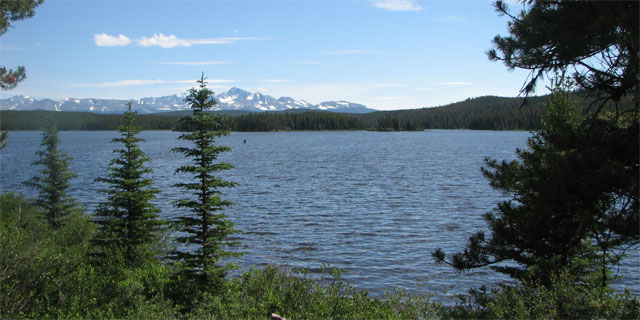 Fish Lake in the Chilcotin. Taseko’s first proposal included eliminating it.
_________________________________________________________
“Yet within weeks of its proposal being rejected last November 2, it claimed that it could now suddenly afford to go with an alternative that saved Fish Lake, and it is now hoping that everyone will forget that both it and the CEAA review panel report made it clear last year that any alternative to the original plan would be an even bigger disaster.”
Taseko’s new move is costly because it will force governments to spend tax dollars dealing with a clearly unacceptable bid, and could even see the province continue to pump tax dollars into promoting this project on Taseko’s behalf.
It will also force First Nations, who have been on the front line of defending the land against this project, to continue to spend scarce resources that would be better spent on pursuing genuine and sustainable opportunity.
One also has to wonder how excited investors are about the company adding to the $100 million it has already wasted pursuing this doomed project over the last 17 years.
The rebid is dangerous because it seeks to avoid having another full review of the project and have governments accept the new plan as addressing all concerns. If it were to succeed, it would mean the strong federal EA process would be taken over by the weak and industry biased provincial process.
In effect, the company is seeking to undermine the entire process and set a precedent that will give companies a way to proceed with bad projects through the back door.
The new bid also diverts attention away from the real issues facing mining in BC, and the need to reform the mining system to ensure that the industry and first Nation and other governments can work together to identify and pursue good mining projects.
“The company and supporters such as provincial Mines Minster Randy Hawes and Liberal Leadership Candidate’s Christy Clark and Kevin Falcon continue to act as if money is the only issue here.” said Chief Baptiste.
“We are particularly offended that Mr. Hawes has once again implied we are holding out for money and that he will try to buy our support with benefit agreements,” said Chief Baptiste.
“He knows full well that we will never accept this project and that for us that this is not about money. We are not willing to sell out the land, the water and our rights, future generations and way of life at any price. Period.”
———–
2011 Canjex Publishing Ltd.
Quesnel Cariboo Observer publishes CMA workshop
Dear CMA members,
Good news on gaining further coverage of our recent workshop. Please pick up a copy of the Observer for February 22nd, 2011.
http://www.bclocalnews.com/bc_cariboo/quesnelobserver/news/116608553.html
Cariboo Mining Association hosts successful workshop
February 22, 2011
Taseko resubmits Prosperity mine plan
http://www.bclocalnews.com/bc_cariboo/quesnelobserver/news/116627583.html

Taskeko resubmits Prosperity mine plan
By Tom Fletcher – BC Local News
February 21, 2011
Taseko Mines Ltd. has resubmitted its environmental application for the Prosperity Mine near Williams Lake to the federal government, with a new plan that avoids draining a lake to get at the copper and gold deposit.
In a statement released Monday, Taseko CEO Russell Hallbauer said the price of copper and gold has nearly doubled since his company began its studies in 2005. The rising price of metals has allowed the company to budget an additional $300 million for construction and operating costs for the life of the mine. The revised plan preserves Fish Lake, which was proposed to be drained and replaced with an artificial lake to mitigate the habitat loss.
The Tsilhqot’in National Government and member aboriginal bands gained national support for their objections, and last November the federal government refused to issue an environmental permit for the project.
“Our initiative to preserve Fish Lake and accommodate the concerns of the federal government and First Nations communities is a major commitment and undertaking by Taseko,” Hallbauer said. “We look forward to working with all levels of government, First Nations communities, the City of Williams Lake and with the Cariboo Regional District on moving this project forward in the coming months.”
The B.C. Liberal government issued an environmental permit for the project, and criticized the federal process for not considering the economic benefits. B.C. Liberal leadership candidate Christy Clark promised to lobby the federal government to reconsider, prompting an angry response from aboriginal leaders.
“Does Christy Clark see Russia from her living room window?” asked Union of B.C. Indian Chiefs president Stewart Phillip, comparing Clark’s support of the mine to former Alaska Governor Sarah Palin’s slogan “drill baby drill.”
Gold diggers hunt for ‘a little flash in the pan’
[Webmin Note: While this article pertains to mainly Vancouver Island it might be prudent for local miners in the Cariboo to also be aware of this growing phenomenon and that this coming spring folks keep a sharp eye out for similar situations. Be aware.]
http://www.vancouversun.com/Gold+diggers+hunt+little+flash/4234462/story.html

Gold diggers hunt for ‘a little flash in the pan’
Miners rush the backcountry of Vancouver Island as price for the precious metal keep soaring
By Tamara Cunningham
Postmedia News February 7, 2011
With the rising price of gold and a struggling B.C. economy, gold diggers are heading into the backcountry to find their fortunes.
“There are days it feels like the gold rush 100 to 150 years ago; the hills are crawling with people looking for a little flash in the pan,” said Ian Jensen, owner of Gold & Fish Adventures in the Vancouver Island community of Courtenay.
Jensen, 42, a boiler operator, has been turning to gold-panning and gold tours every summer for two decades.
“This is more of a hobby for me … the whole thing is an Easter egg hunt. You are looking for that next big nugget and you never know when you’ll come across it,” he said.
Jensen and his colleague, Dave Mullet, 55, mine a claim just 40 minutes from downtown Courtenay. The process isn’t always easy, but it’s rewarding and recession-proof, they said.
The duo heads into the backcountry at the first sign of spring, often passing old sluice boxes and miners’ cabins set up along the Oyster River during the Island’s first gold rush over 100 years ago. They’ll hike or rappel down cliffs to get to spots that look untouched and when they find it, they spend hours bent over, sifting through rock to look for the motherlode.
“You never know what you are going to get. I dug nine days thinking I’d hit the jackpot and got barely enough to keep me going,” Mullet said.
“Then one day I was eating lunch and picking up some magnetite for the kids back home, and I see a flash of yellow underneath. I got more gold from that one spot than I had in nine days. It was huge.”
These days, with the soaring value of gold and rising popularity of shows such as Gold Rush: Alaska, the miners are seeing more competition — sometimes on their own claim. Independent miners are heading into the mountains looking for their share of gold and are not always mindful of government-sanctioned claims or private property.
Jensen said each summer he is seeing more wild-eyed, gold-lusting men searching the creeks near Mount Washington for extra cash.
Tiny nuggets can earn up to $50 and there is always the chance of finding a jackpot.
The Canadian Prospectors Forum
 This forum is highly recommended to members. We are working on creating a forum for the CMA site itself but for the purposes of a more widespread perspective it might be a good idea to register on this one as well.
CMA Hosts Ministry of Natural Resources Operations Workshop in Quesnel Feb. 15, 2011
CMA Hosts Ministry of Natural Resources Operations Workshop in Quesnel Feb. 15, 2011
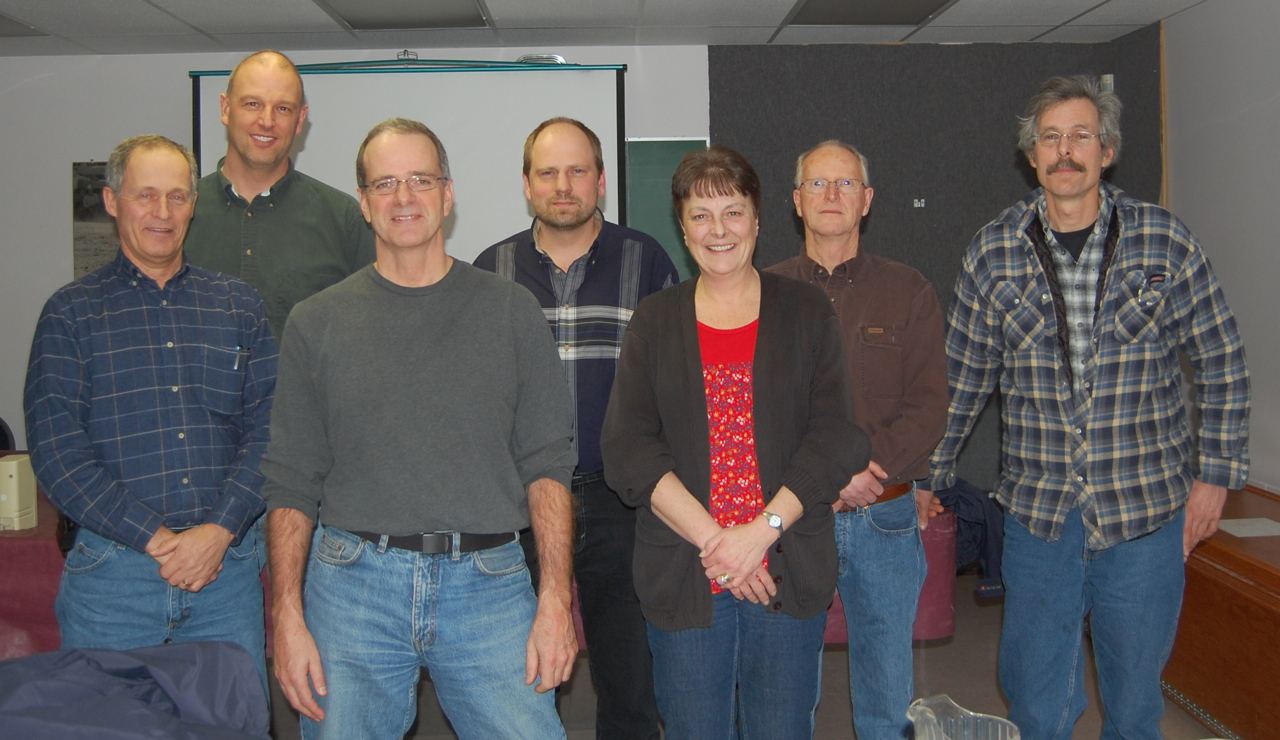 Back row, Left to Right: Grant Feldinger, Andy Oetter, Don Smith, Chris Winther
Front Row, Left to Right: Joe Seguin, Bruce Hupman, Anne Brunke
[Webmin Note: The following article was submitted to the Quesnel Cariboo Observer today (Nov. 17) for publication.]
QUESNEL, B.C.: Wednesday, February 15 saw the Cariboo Mining Association (CMA) host a Workshop at the Quesnel Senior’s Center where a number of senior staff from the newly formed Ministry of Natural Resource Operations (NRO) put on a day long information session for local hard rock and placer miners to update them on current and upcoming changes within their related ministries.
Billed as a ‘Notice of Work and Reclamation’ planning session, Joe Sequin, Regional Director for the NRO, Mining and Minerals Division for the South Central Region, Kamloops and Bruce Hupman, Senior Inspector of Mines also of the NRO, brought along an additional crew of four other top staff members including Anne Brunke, Inspector of Mines, Permitting, Don Smith, Inspector of Mines, Permitting, Andy Oetter, Manager of Authorizations for the Thompson Okanagan Region and Grant Feldinger of the Williams Lake office for a day filled with new information covering a wide range of related mining topics.
The morning’s activities primarily dealt with helping local placer miners to get a clearer idea about some of the recent changes to one of the fundamental tools of the trade – the staking of claims.
In the old, pre-computer days, a person possessing a Free Miner’s Certificate could grab a compass, axe, a set of metal tags and then jump in their pickup truck and go out into the goldfields to stake their claim but those times are now over.
Today the placer or hard rock miner has to lay down their axe and compass, park their pickup, turn on their computer, grab their ‘mouse’ and head off into the wilds of cyberspace in search of new ground to stake and explore.
Not an easy task for many of the older miners who may have few of the computer skills necessary to wend their way through the maze of online ministries where instead of blazes on trees and brushed compass trails on the ground they now have to contend with pdf files, templates, digital maps, jpgs and GPS UTM coordinates and instead of going to their local government agent office and paying for their claim at the counter they need to make online credit card transactions.
To clarify and assist these transitional moves to online staking and alleviate the stress of maintaining and keeping ones placer claims in good standing was one of the main objectives of the morning sessions and Don Smith was there to assist. As Bruce Hupman, Senior Inspector of Mines put it to the sometimes perplexed audience of miners, “We’re here to help you, not to hinder you.”

Photo: Small placer testing program at the old Langford Camp mine site at 9 km on the Beaver Pass (2400) road summer of 2010.
The topics of discussion ranged from online staking to concerns about leases and cells, bonds and the perceived meager annual yardage now available to placer miners who have acquired cells for exploration and development.
The latest word within mining circles is that with the reorganization and amalgamation of a number of former ministries (Ministry of Energy, Mines and Petroleum Resources) into one centralized, super ministry known as the Ministry of Natural Resource Operations, this process will most likely put a halt to changes that were in the works which would have allowed the volume of pay dirt to be mined in a season on a single cell to go from its current 2000 cubic meters upwards to a possible 20,000 cubic meters.
As far as the audience could discern, until the new ministry gets reorganized and whatever government of the day ends up running the province over the next year, these proposed changes would not likely come into effect until 2012 at the earliest.
Another major concern, especially in the wake of the recent ruling on Taseko Mine’s Prosperity project in the Chilcotin, was the issue of consultation and the perceived problem for miners of fulfilling all the obligations with respect to the sometimes nebulous process of negotiating with First Nations whenever a claim owner wishes to develop their ground.
Many of the smaller placer miners feel that it should not be their individual responsibility to negotiate with third levels of government such as First Nations whenever they wish to develop their claims but rather that the province itself should set the standards and precedents for all interested parties and relieve the smaller miner of what too often becomes a very costly and onerous process of dealing with third party interests.
Ministry representatives assured the audience that in terms of the government’s perspective on the issue the threshold for consultation with First Nations is considered to be “very low.” By that was meant the provincial government’s position is to do all they can to accommodate First Nations concerns whenever dealing with issues of mining and mineral exploration.
The overall attitude of the mine inspectors was that in order for the mineral exploration and mining industry to cope with and improve the public’s perception of mining as an honorable, viable, environmentally responsible and essential primary industry within the province (contributing $6 billion to the provincial economy annually), it was essential to maintain and adhere to the high standards now set for environmental integrity and sustainability.
 As Senior Inspector of Mines Hupman put it, “We have an image problem” and in order to repair the damage done by vested interests who would rather see mining and exploration disappear all together, it’s crucial that those who mine the earth for her treasures do so in a sustainable and responsible manner and that when they are finished processing the minerals that they return the disturbed ground to as natural a state as possible.
As a result of this perspective on the part of NRO staff, throughout the day’s workshop was heard again and again the refrain, “Reclaim! Reclaim! Reclaim!”; watch words for regaining lost PR ground that the audience appeared to heed without much complaint.
By the end of the session it was fairly obvious that gathering of government and miners had turned into a “win-win” situation. As CMA President Chris Winther put it, “The workshop was a great success for all concerned and we are looking forward to putting on more events like this in the future.”
__________________
Feedback is appreciated. Just click on the “Leave a Comment” icon and let us know what you think.
President’s Welcome to the Cariboo Mining Association website

On behalf of the Cariboo Miners Association I would like to welcome all visitors to our new site.
The CMA is made up of a diversity of people who come from all levels of mining yet we equally share the same enthusiasm when it comes to digging for gold.
Most miners are basically solitary sorts who want to simply carry on with mining but of course we realize that we’re also dependent upon each other for support when it comes to dealing with the different challenges now facing our industry.
In this regard I believe there is strength in numbers.
The Cariboo Mining Association was formed in order to deal with the special problems that miners face as well as provide a common ground where we can meet to share ideas and concerns and work out solutions to our problems. In this way we learn from each other and stand strong together as an intelligent, co-operative force.
Miners, for a variety of reasons, have always been an industrious group; men and women filled with a deep passion for what they do and the will to succeed.
Inevitably though, as the mining industry continues to grow and flourish so does government and its attendant bureaucracy. For miners, be they placer or hard rock, this means having to meet greater demands that all the various levels of government place upon us.
The provincial government, while it freely receives significant monies in acquisition and tenure maintenance, still tends to underestimate the miner’s actual contributions to the province as well as the local communities in which the mining industry actively operates. As such governments tend to overlook how the smaller mining operations actually stimulate the local economy in so many ways – some obvious examples being the purchasing of fuel, equipment, supplies, as well as providing jobs and contributing in significant ways to the local tax base.
For these reasons and many more the CMA has proven itself to be a useful and valuable organization and we look ahead to the future with a growing sense of optimism that continues to rise along with the price of the commodity that drives both our purpose and our work ethic.
I would also like to bring to the attention of the public the fact that the CMA holds regular monthly meetings in Quesnel, usually on the second Sunday of each month during the winter season at the Senior’s Center. During the Summer on the second Tuesday in the evenings for a full schedule just send us an e-mail and we will let you know when our next meeting is. I would encourage people to come and join us for lively discussions and to learn more current information about government changes to the mining regulations. Share with other miners the ideas, stories and experiences that have made our industry one of the most colourful and historically interesting areas of employment in the province.
As President of the CMA I am enthusiastic about where we are heading and confident that our membership will continue to grow. We have the responsibility to ensure that mining continues for generations to come, while at the same time respecting and sustaining our environment so that all can prosper, now and into the future.
Rick Wittner
CMA
President
Email Rick at: cariboominingassociation@hotmail.com

 The Cariboo Mining Association